How to Write a Viral Startup Launch Post (With Real Examples)

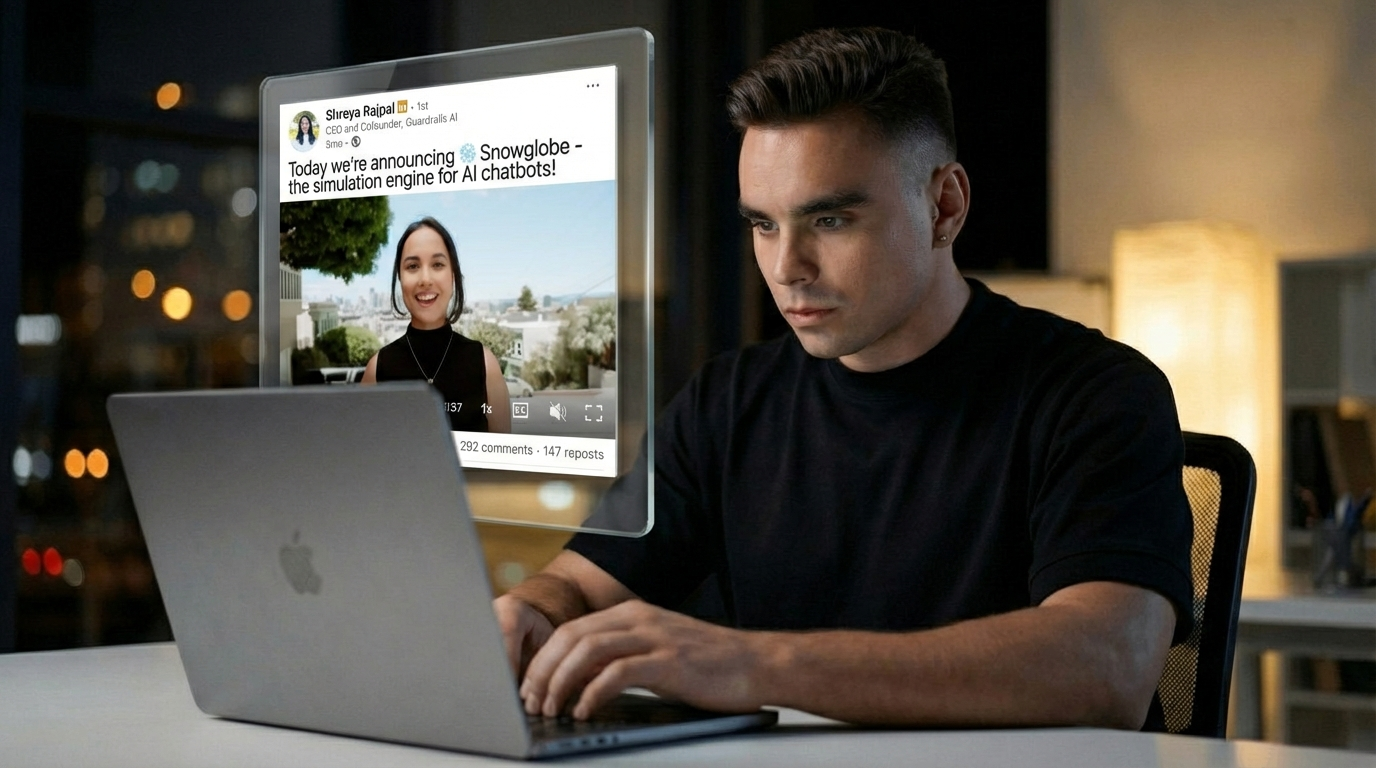
I've helped launch startups that have racked up millions of views on LinkedIn and X. And today, I am going to show you how to write launch posts that actually work.
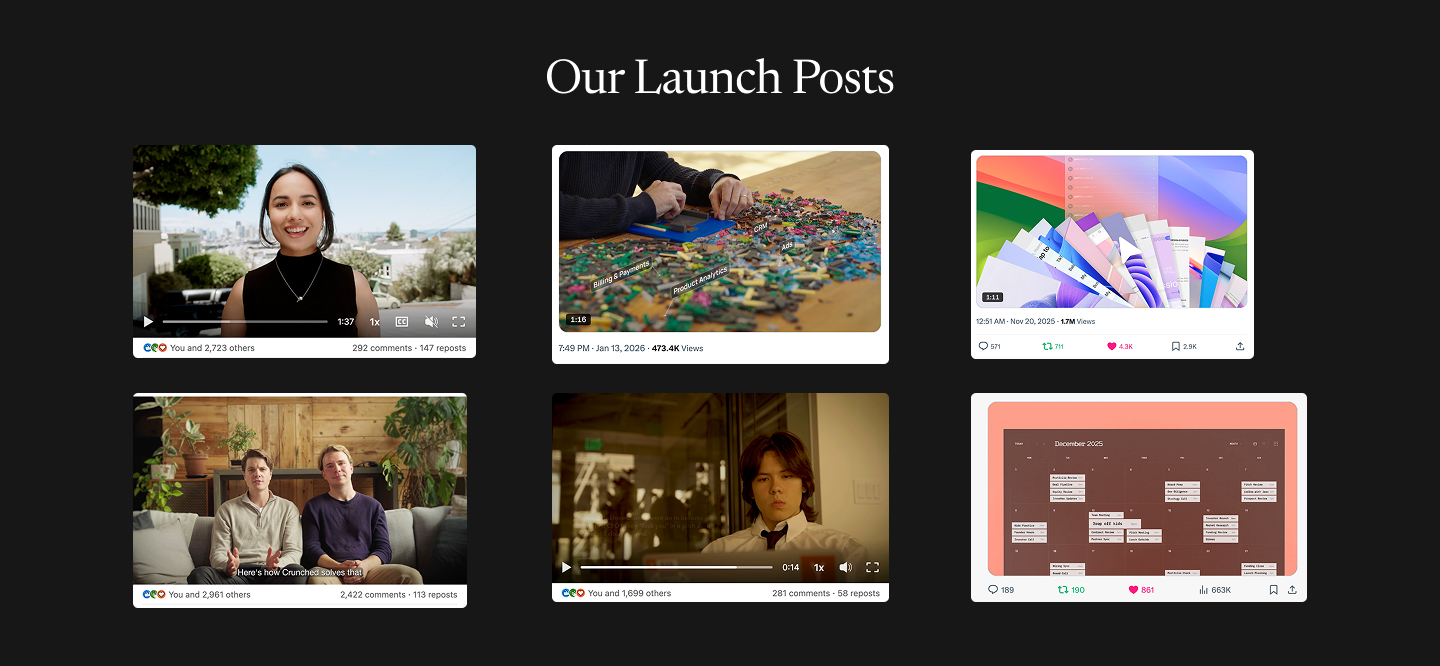
For most people, the launch post is an afterthought. They write it a few hours before they are to go live.
That’s a huge mistake. Your product launch is one of the highest-leverage marketing moments you'll ever have. A single post can flood your waitlist, fill your demo calendar, and put you on every investor's radar overnight.
This guide breaks down exactly how to write a launch post that actually goes viral - with real examples, platform-specific structures, and the engagement tactics.
P.S. We built a free Launch Post GPT that writes your launch post for you. It's trained on 100+ viral launches and our internal writing frameworks.
What Does a Viral Startup Launch Post Actually Look Like?
Before we get into the writing frameworks, let's look at what actually works. I've analyzed 300+ of viral launch posts across LinkedIn and X, and the pattern is clear: the winning formula is always post + video.
Every post that breaks through has two things working together: a well-structured written post that hooks and persuades, paired with a product video that shows what you’ve built in action.
Let's break down real posts that blew up.
Icon: 9,500+ Comments, $5M ARR in 30 Days
Kennan Davison launched Icon, an AI UGC ad maker, with a single LinkedIn post from his personal account.
The result: 9,500+ comments, 10M+ views across socials, 5,000+ inbound demo requests, and $0 to $5M+ ARR in 30 days.
What made it work:
- Opened with positioning, not fluff. "Introducing Icon, the world's first AI Admaker." One sentence. You immediately know what it is and why it matters.
- Showed how it works in clear steps. Four numbered steps that walk you through the product experience. No jargon. No hand-waving.
- Stacked social proof organically. Backed by Peter Thiel's Founders Fund. Co-built with $100M+ revenue brands like Ridge and Jones Road. These aren't throwaway lines - they answer the trust question before the reader even asks it.
- Closed with an engagement tactic. "Comment 'Icon' below and we'll send you the Google Drive link."
- Used a powerful product launch video. The video showed Icon in action - not a flashy reel, but the actual product doing the thing it promised.
Snowglobe: Clean, Technical, Founder-Led
Shreya Rajpal launched Snowglobe, a simulation engine for AI chatbots, with a post that nailed the technical audience without dumbing anything down.
What made it work:
- Led with the announcement. "Today we're announcing Snowglobe - the simulation engine for AI chatbots." Direct.
- Used an analogy that clicks. Compared AI chatbot testing to self-driving car simulation (Waymo's 20+ billion simulated miles). Smart framing that makes an abstract concept instantly tangible.
- Named the problem from real experience. "We built Snowglobe to solve a problem we ran into again and again building Guardrails for the last two years." This is first-person credibility - not theory, but a problem they lived through.
- Made a compelling visual metaphor. Showed the actual self-driving car in the first few seconds.
Cluely: Controversy as a Launch Strategy
Chungin Lee launched Cluely - "a cheating tool for literally everything" - with $5.3M in funding and 400+ comments.
What made it work:
- Led with a contrarian personal story. "I got kicked out of Columbia for building an AI to cheat on coding interviews." That's a hook most people can't scroll past.
- Positioned against the "AI assistant" crowd. Instead of joining the oversaturated wave of AI assistants, they built a tool that helps knowledge workers perform so much better it genuinely feels like cheating - and leaned all the way into that angle.
- Made the video relatable. Instead of a dry product demo, they showed the AI helping someone crush a dating “interview” - a universally understood, high-stakes moment. The metaphor lands instantly: this is an invisible assistant that helps you win at whatever you're doing.
The Launch Post Formula
Now that, you’ve seen the actual examples, let’s deconstruct the core post structure:
- Announcement - Clear statement of what's launching. One sentence. Name + what it does.
"Introducing Icon, the world's first AI Admaker."
- Problem - The pain point your product solves. Make it specific and felt.
"Making lots of ads is extremely painful. AI-generated ads look like trash."
- Solution - How your product solves the problem. Focus on differentiation and positioning.
"Icon remixes your existing footage into new ads, matching your production quality."
- How it works - Walk through the product experience in 3-4 numbered steps. Show how easy it is.
"1. Icon tags your video library. 2. Generate scripts with AdGPT. 3. Icon matches clips to scenes. 4. Edit until you're happy."
- CTA - Frictionless call to action. Never put a raw link in the post - it kills reach. Either disguise it (like "usecrunched[dot]com") or drop it in the first comment.
Optional add-ons (use when relevant, don't force them):
- Social proof - Investors, revenue milestones, customer logos. Weave in organically, don't list-dump.
- Engagement tactic - Giveaway, early access, or resource in exchange for a comment. This is the single biggest lever for algorithm reach. More about it in later in this article.
- Personal story - How the founder discovered the problem. Works best on LinkedIn where narrative-driven content thrives.
Tailoring The Post To The Platform
LinkedIn is where you tell the story. Longer-form, announcement-style framing. Professional but human tone. Posts live for days. Aim for 150–300 words with generous line breaks and white space. The algorithm rewards dwell time, saves, and comment.
X is where you show the product. Shorter, punchier, more casual. Threads are great to show individual features. You can attach 15-30 second clips of the product or use cases.
And whatever you do, don't copy-paste the same post across both. Rewrite for each platform's native format.
Where Should You Post Your Launch?
Keep it simple. LinkedIn and X are the only two platforms that matter for launch day.
LinkedIn gives you the higher-quality audience. Decision-makers, VPs, founders - the people who actually buy software live here. But distribution is harder to earn. The algorithm is slower, more deliberate, and rewards depth over speed. Your post can circulate for days or even weeks if it hits, but it takes real engagement effort to get the flywheel spinning.
X is where things can go truly massive. The ceiling for virality is much higher than LinkedIn. When a post catches fire on X, it spreads faster and further than anything on LinkedIn. Dev tools and founder-led products especially thrive here.
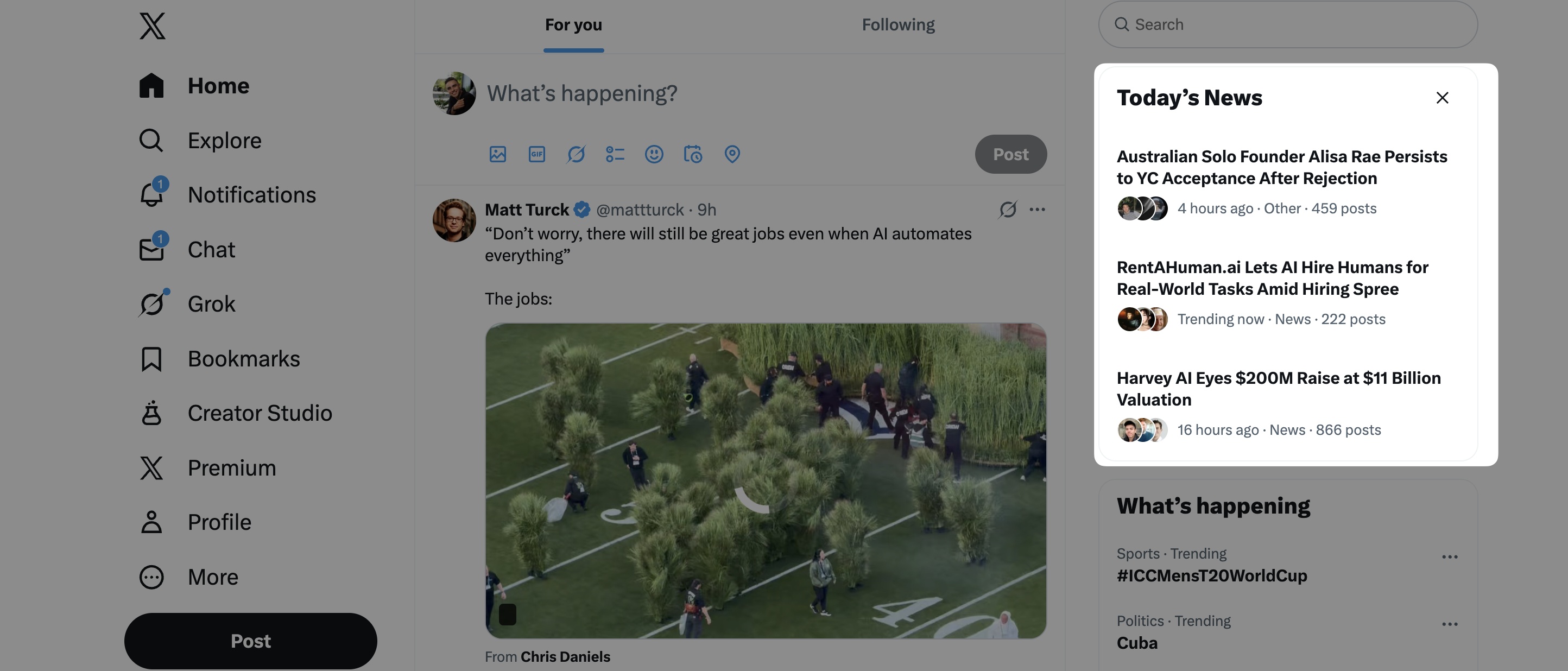
My recommendation: post on both, but write a native version for each. Don't copy-paste. We'll cover the format differences later in this guide.
What About Product Hunt?
I'd avoid launching on Product Hunt at the same time as your social launch. I say this as someone who has won Product of the Month on Product Hunt - it's a serious campaign on its own. You need a Maker's Post, custom visuals, a hunter lined up, and a coordinated upvote and comment push on launch morning. It's a heavy lift. If you try to do it alongside your LinkedIn and X launch, you'll do both poorly. Run it as a separate campaign, a week or two later.
Don't Overlook Your Existing Community
Two channels that are consistently completely ignored.
Email - The most overlooked launch channel, period. If you've been building a waitlist or have a solid user base, you just have to leverage. These people already opted in. They're warm. Don't sleep on them.
Communities - Slack, Discord servers. These are small but high-intent audiences. They are your biggest advocates already. They’ll spread the word.
What Account To Post From - Founder or Company?
Always the founder's personal profile.
This isn't even close. Refine Labs found that personal LinkedIn profiles drive 2.75x more impressions and 5x more engagement than company pages - even with 46% fewer followers.
Vulse's analysis of 400M+ LinkedIn impressions confirmed it: employee posts outperform brand content by 14x.
The algorithm simply doesn't push company page content. Your founder's face and story will always outperform a logo.
The play: founder posts the launch from their personal account. Company page reposts. Team members engage, comment, and reshare. That's your multi-source amplification effect.
When Should You Post?
Everything depends on your audience, but here's the general rule: Tuesday through Thursday, 9–10am Pacific Time. This hits the East Coast at lunch and catches Europe before end of day.
Avoid Monday - everyone's in planning mode and back-to-back calls. Avoid Friday - people are checked out. And weekends are a dead zone for LinkedIn.
How to Maximize Engagement
Most founders completely overlook this part - and it's a massive mistake. Engagement in the first hour can be the difference between 2x the reach or your post dying in silence.
Don't think you're too good for this. You spend months building your product and preparing the launch. Spending an hour being strategic about engagement is one of the highest-leverage things you can do.
Warm Up Before You Post
Don't just hit publish cold. Days before your launch, start warming up your LinkedIn account. Message people directly, engage on their posts for 30 minutes a day, leave thoughtful comments. You want your connections primed to see your content when it drops.
Right before posting, spend 30 minutes engaging - like 30 posts, leave 10–15 real comments. This signals to LinkedIn that you're an active community member and can boost your initial distribution.
What To Do After You Post
Reply to every comment within 2 hours. Don't just say "thanks" - ask follow-up questions to spark longer threads. Indirect comments (replies to other commenters) drive 2.4x more reach than direct comments.
Coordinate your team. Have 10+ people ready to comment meaningfully in the first 10 minutes. Not "great post!" - real comments that add to the conversation. This early burst of activity is what tells the algorithm your post is worth pushing to more people.
The Post Is Only One Piece of the Puzzle
So now you know how to write a great product launch post.
But here's what most founders realize next: a well-written post without a great launch video is leaving half the impact on the table.
Go back and look at every example we broke down - Icon, Snowglobe, Cluely. Every single one paired a strong written post with a great video. The post gets people to stop scrolling. The video gets them to care and emotionally engage.
Next, it’s not all magic. The highest-performing launches we've worked on combine the post with influencer amplification to extend reach beyond organic.
That's what we do at Represent - we're a launch partner for startups from YC to enterprise. We produce the product launch video, write the launch posts, run the distribution, and handle amplification - so you can stay focused on the product.
If you're preparing for a launch and want a team that's done this hundreds of times, check out our work here.
P.S . - Try our free Launch Post GPT - it's trained on 100+ viral launches and our internal writing frameworks.