How to Launch a SaaS Product Successfully: The Ultimate Step-by-Step Guide


Every SaaS company, at some point, faces the same high-stakes moment: the launch.
Maybe you're shipping your MVP and need real users and investors. Maybe you just closed your Series A and need to announce funding in a way that actually builds pipeline. Or maybe you're Series B, rolling out a 2.0 product version.
Different stages - same job: show the world what you built and turn attention into real users.
The problem is, most teams treat launch like a one-day event. They post an announcement, and cross their fingers. Then they wonder why they have 47 likes and 3 net new users.
That's not a launch. That's a coin toss.
This guide is the step-by-step playbook we use at Represent after producing 100+ launch campaigns for SaaS and AI startups. Those launches generated millions of views, raised 8 figure rounds, and created real momentum.
The Launch Triangle
But before we get into tactics, you need to understand the three components every successful launch requires:
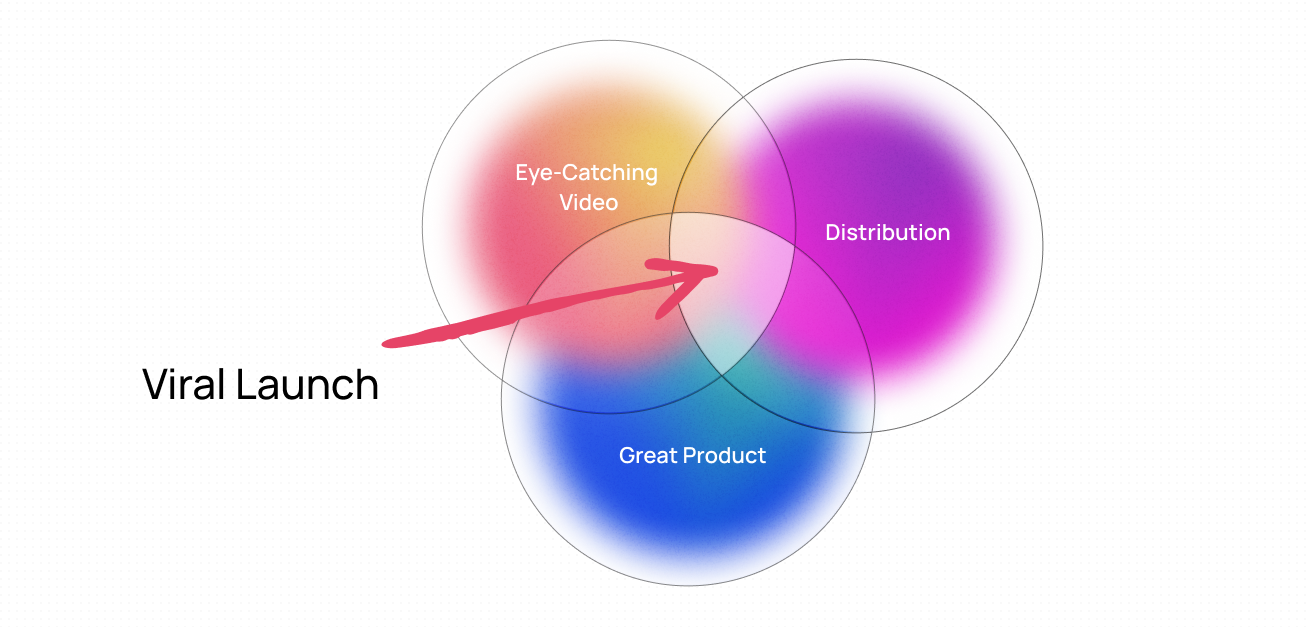
- Product (Newsworthiness) - Is there something interesting/new here?
- Story (How you show it) - Most teams explain products like a changelog. Your job is to make people feel like the old way of doing things no longer makes any sense. Show them the new world!
- Distribution (Enough eyeballs, at the right time) - Great story, zero reach = no traction.
Launch Outcome = Product × Story × Distribution
It's multiplicative. If any one is near zero, your launch is near zero.
Nail all three and your launch compounds. Miss one and the whole thing can fall flat.
Let's break it down.
Step 1: What Are You Launching?
A launch only works when there's something newsworthy at the center.
Not "newsworthy" as in TechCrunch will cover it. Newsworthy as in: when someone sees your post, their brain fires. They stop scrolling. They send it to a colleague. They think, "I need to look at this."
Here's the test: In the Wright brothers era, an airplane taking off was a "holy sh*t, the world just changed" moment. Today, you see a plane overhead and your brain barely registers it.
Most SaaS "launches" are the equivalent of showing people a plane in 2026. "We built a thing!" Cool. Let me guess - a B2B SaaS? So did 400 other startups this week. Nobody cares.
The real question is not "How do I launch?" It's "Why should anyone care?"
Answer that right, and you have the foundation of your entire launch.
Before the video. Before the landing page. Before the distribution plan. Get the narrative right, and everything downstream gets 10x easier. Get it wrong, and no amount of influencer spend or algorithm hacking will save you.
Now, here's the part most founders get stuck on: they wait. They wait for the product to be "ready." They wait for the positioning to be "perfect." They wait until they feel confident.
That moment never comes.
The product will never be fully ready. The positioning will never be airtight. And the only way to sharpen both is to put something out in the world and watch how real people react. Launches aren't the final exam. They're the feedback loop.
So: what's newsworthy about what you're building? What changed? What's the delta between the old world and the new one you're creating?
Start there. Everything else follows.
If you're struggling to articulate what makes your product worth launching right now, April Dunford's Obviously Awesome is the best starting point.
Her positioning framework boils down to these questions:
- What would customers use if you didn't exist?
- What do you do that nobody else does?
- Who cares about that the most, and why?
- What market context makes your value obvious?
Work through those honestly, and you'll have the raw material for a launch narrative people actually respond to.
Step 2: Build Launch Assets
Every launch needs two core assets: a launch video and a launch post. Both tell the story of your product and the problem it solves.
Launch Video
Before you start producing, study what's working right now.
We put together a free reference library of the best launch videos in tech: Video References: Launch Videos.
Spend 30 minutes watching the ones in your category. You'll start to notice patterns. And more importantly, you'll develop taste for what your launch should feel like.
There are two main formats:
Format A: Founder-Led (Human-First)
The founder narrates the story and demos the product.
Why it works: People buy from people. When a founder explains the problem from personal experience and then shows how the product solves it, it builds instant trust.
When to use this format: fundraising, trust-first industries (law, compliance, B2B), enterprise
Format B: Motion-Led (Clarity-First)
Here we show beautifully animated and often simplified interfaces.
Why it works: Some products are hard to explain with words alone. Product-led videos compress complex workflows into something a viewer can see and understand in seconds. They also scale better across channels: your homepage, ads, sales decks, social posts.
When to use this format: technical tools, consumer products, home pages
The video creation process looks like this:
- Idea and angle.
- Script.
- Storyboard.
- Filming or creation. Founder-led means a shoot or screen recording. Motion-led means design and animation.
- Motion and polish. Transitions, pacing, music, sound design.
Timelines: Both video formats typically take 2 to 3 weeks. Plan accordingly.
At Represent, this is what we do. We produce launch videos for SaaS and AI startups, from script to final cut. If you want a partner to handle this end-to-end so you can stay focused on the product, check out our launch video service.
Launch Post
Your launch post is how most people will first encounter your product. It needs to do three things: stop the scroll, frame the problem, and drive engagement.
Here's what separates posts that get 47 likes from posts that generate thousands of signups:
Write for the platform, not for yourself.
LinkedIn rewards personal narrative. Lead with "I" and tell the founder story. X rewards novelty and speed. Lead with the product and what's new. Don't copy-paste the same post across both.
Follow a proven structure.
The posts that go viral almost always follow the same skeleton:
- Hook - intro what you built.
- Problem the reader recognizes
- Solution framed as a user story
- Proof (numbers, investors, clients)
- Single CTA (sign up/drop a comment)
Writing a great launch post is equal parts copywriting and distribution mechanics. We built a free tool that walks you through both: Launch Post GPT.
Landing Page: Where Attention Turns Into Users
Your launch post earns attention. Your launch video builds understanding. Your landing page converts.
If the page is weak, you waste the spike you worked so hard to generate.
Here, my only advice is to make the happy path as effortless as possible.
Companies like Rows and GenSpark even drop you straight into the product to reduce friction.
Step 3: Getting The Eyeballs
If you think you're going to post and the algorithm will carry the launch… think again.
I talk to SaaS marketers every week, and you'd be surprised how many still believe in magic.
NONE of the biggest launches in the world are organic.
Devin with their 30m+ views? Icon with their 3m+? Lindy AI?
The big launches look organic. But they were engineered.
And that’s what we do as well to get millions of views and traction.
Let me remove the curtain and show you behind the scenes of distribution. There are four levels to get eyeballs.
Level 1: Activate Your Network
Your highest-leverage move is unsexy: get people who already know you to repost you.
The logic here is simple: You spent the last few years building your network, trust, and goodwill.
- Build the list. Hit up your last 100–200 conversations across email, LinkedIn, WhatsApp, text.
- Activate employees. They should repost you when you go live AND hit up everyone they know to engage.
- Enlist key supporters. Investors, advisors, integration partners, service providers.
Level 2: Users & Community
Your existing users are your most credible amplifiers. Send a launch email. Keep it simple: what shipped, why it matters, one CTA.
Then look at who among your users has distribution. Founders, creators, devrels. Ask them directly for a repost. Most will say yes if they like your product.
Finally, recruit a super fan squad of 10 to 30 people who commit to liking, commenting and promoting your launch. Make them feel ownership of your success.
When I was building Bardeen AI, one of our most active community supporters became so invested in the product that I ended up hiring him full-time as head of community.
Level 3: Influencers
You can't build an audience in a week. But you borrow one.
The idea is simple. You pay creators in your niche to post about your product on launch day. But the real value isn't just their followers seeing it.
When multiple creators post about the same product within a tight window, the algorithm notices. It starts showing your content to adjacent audiences organically. That's the compounding effect you're after.
The execution, though, is anything but simple. You need to build a creator list, run outreach, negotiate rates, handle contracts, align on messaging, and coordinate timing so everyone posts within the same two-hour window. It's a full operational lift.
If you have the bandwidth, you can run this yourself. But for most teams, it's worth paying an agency that already has the relationships and the system in place.
At Represent, we run influencer amplification campaigns where we activate 40+ creators. If your product qualifies, we guarantee 300,000+ views on your launch video.
Level 4: Hustle
Once you've covered the foundation levels, dedicate 20% of your effort to Hail Mary moves. These are risky. Most won't land. But when one does, it can put you on the map overnight.
This is old school hustle. People at this level won't support you for money. They'll do it for story and goodwill.
I once reached out to Tim Draper. Yes, that Tim Draper. Billionaire VC.
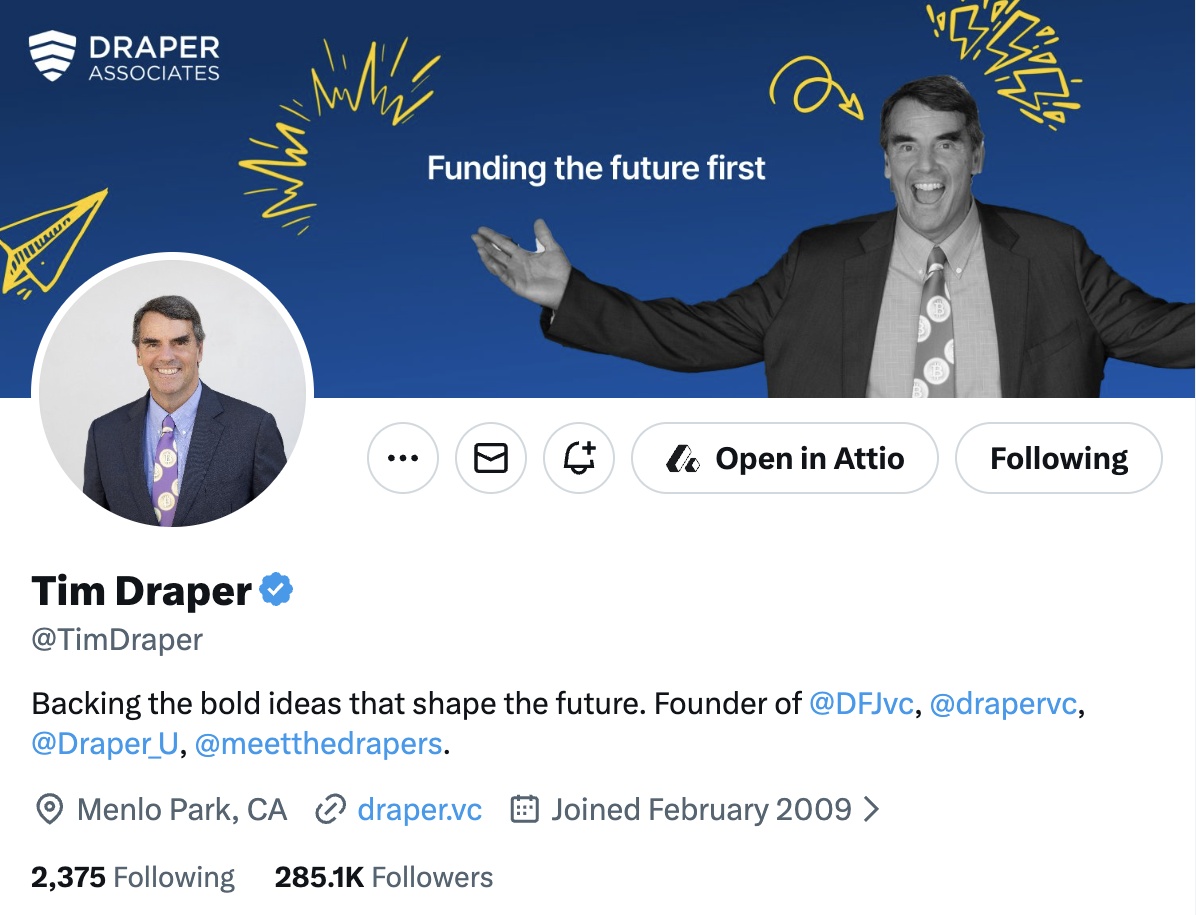
I asked him directly to repost our Product Hunt campaign. I was nervous. I didn't want to burn the relationship over a social media post.
But we'd spent months building, and I decided to take the shot and wrote him an email. He retweeted us. That single action created a wave of credibility and attention we couldn't have manufactured any other way.
The angle that works: sell the vision and your personal story - all you need is one of the shots to land.
Step 4: The Launch
You have the assets. You have the distribution lined up. Now it's game day.
Everything you built in the previous steps exists to serve this moment.
Logistics
Platforms: LinkedIn + X.
Don't overcomplicate it. Two platforms. That's it.
- LinkedIn rewards founder-led narrative and early engagement.
- X rewards novelty, speed, and product-first threads.
Timing: Tuesday, Wednesday, or Thursday. 9 AM PT.
Pick one day and commit. 9am Pacific is late morning on the East Coast and still reasonable for Europe. You want the first wave of engagement to stack while people are actually online.

Warm up the algorithm: 15 to 20 minutes per day, 5 to 7 days before launch.
This is not "building hype." This is mechanical. Drop comments. Like posts from people in your network. Reply to threads. The algorithm tracks reciprocity. When you've been active, it shows your content to the people you engaged with first. If you skip this step, your launch post lands in a cold feed.
Review the funnel before you post.
Can a new user get to the aha moment fast? Is signup frictionless? Do verification text messages fire?
Test the entire flow end-to-end the day before. If anything breaks on launch day, you lose the spike.
The First 2 Hours
Clear your calendar. It’s show time. Don’t “post and ghost.”
- Activate partners immediately. Ask directly to repost. Follow up with them shamelessly.
- Reply to every comment. Speed creates comment velocity, which expands distribution.
- Send the user email. Include explicit ask: "If you have 10 seconds, like/comment/repost the launch post here."
Step 5: Post Launch - Don't Leave Potential Users Unattended
Most teams treat launch day like the finish line. It's not. It's the top of the funnel.
After the dust settles, there is a goldmine of warm leads sitting right in front of you. People who liked your post. People who commented. People who visited your site and didn't sign up. Almost nobody works this list. That's a mistake.
Here's what to do.
Scrape Your Engagers
Every like, comment, and repost on your launch content is a hand raised. On LinkedIn and X, you can scrape that engagement data and build a list of everyone who interacted with your post. Filter by your ICP. Then reach out one by one.
Keep the message human. Something like: "Saw you liked our launch post. Quick question: are you dealing with [problem] at [Company] right now, or was it more general curiosity?"
That's it. No pitching or being clever. Just a conversation starter. You'll be surprised how many turn into real pipeline.
Thank Your Supporters
DM every person who meaningfully supported the launch. Tell them what happened because of their help.
This does two things. It makes them feel valued. And it makes them far more likely to support you again next time and refer you customers.
The thank-you loop is how you turn a one-time launch squad into a permanent amplification network.
Our client Poly sent us swag after their launch and months later, we're still raving about them to anyone who'll listen.

Run A Remarketing Campaign
This is the part you have to set up before launch day, not after.
Install your tracking pixels ahead of time: Google Ads tag, Meta pixel, LinkedIn Insight Tag, X pixel. You cannot retroactively pixel people who already visited your site. If you skip this step, every visitor from launch day is gone forever.
Once the pixels are in place, the playbook is simple. In weeks one through three after launch, run remarketing ads to two audiences: people who visited your website and people who engaged with your social posts. Use cutdowns of your launch video as creative. Single CTA.
The goal isn't to "go viral again." It's to convert the warm traffic you already earned into users and pipeline.
Your Launch Is A System
Most SaaS launches fail for a boring reason: the team treats launch day like a content drop.
A real launch is a system: Product × Story × Distribution.
Your product positioning is the story foundation. Distribution gets you attention. Your funnel converts belief into users.
Here's the hard part. Running this system well takes serious bandwidth. You're building a product, managing a team, closing deals. Adding "coordinate 40 creators, produce a launch video, write platform-specific posts, and run a launch blitz" to your plate is a lot.
That's the problem we solve at Represent.
We act as the launch partner for SaaS and AI startups. We don't just "make a video." We produce the launch video, write the launch post, engineer launch-day distribution, and run creator amplification with guaranteed reach.
So founders can stay focused on the product while the launch runs as a system.
If you're planning a launch and want a team that's done this 100+ times and guarantees reach - let's talk.